
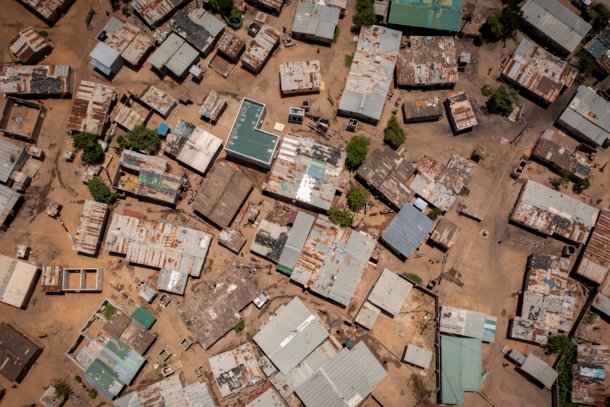
One of the things I enjoy about drone photography is how it changes perspective.
From a few hundred metres above the ground, a community looks very different. What stands out are the crowded rooftops, narrow roads, winding footpaths, and the sheer density of people living together in a relatively small space.
It’s easy to look at such an image and immediately begin talking about congestion, poverty, housing shortages, or infrastructure challenges.
But over the years, having worked in the international development sector, I have learned that communities should never be defined solely by what they appear to lack.
Because what a drone cannot capture is often the most important part of the story.
It cannot capture the mother waking up before sunrise to prepare for the day.
It cannot capture the young entrepreneur running a business from a single room.
It cannot capture the student studying late at night, determined to become the first graduate in the family.
It cannot capture the countless acts of resilience, sacrifice, determination, and hope that play out beneath those rooftops every single day.
That is the side of the story I think about when I look at these images.
Looking Beyond the Statistics
As Zambia pursues the Grow Zambia Agenda, conversations naturally focus on ambitious targets.
More agricultural production.
More electricity generation.
More tourism.
More exports.
More jobs.
These are all important goals.
But whenever I hear discussions about growth, I find myself asking a simple question:
What will growth actually feel like for the people living beneath these rooftops?
Because economic growth only becomes meaningful when it improves lives.
A growing economy should translate into opportunities that people can see and experience in their daily lives.
Better schools.
Safer communities.
Reliable energy.
Access to technology.
Quality healthcare.
Decent jobs.
Thriving local businesses.
Functional infrastructure.
A pathway for young people to turn potential into prosperity.
The Untapped Potential in Our Communities
One lesson I have taken from my years in development work is that some of Zambia’s greatest assets are not found in boardrooms, government reports, or investment portfolios.
They are found in communities.
They are found in people.
Every crowded settlement contains entrepreneurs.
Skilled artisans.
Teachers.
Technicians.
Community leaders.
Innovators.
Young people with extraordinary potential.
The challenge is often not a lack of ability.
It is a lack of opportunity.
That is why inclusive growth matters.
Growth that benefits only a select few may improve statistics.
Growth that reaches communities transforms nations.
Growth Must Be Seen and Felt
One of the dangers of development conversations is that they can become overly focused on numbers.
Numbers matter.
But people experience life differently.
A parent experiences development when a child can access quality education.
A young person experiences development when they secure meaningful employment.
A small business owner experiences development when there is reliable power, access to markets, and the ability to grow.
A community experiences development when basic services become more accessible and opportunities become more abundant.
That is the test every growth strategy must ultimately pass.
Not whether targets are met.
But whether lives are improved.
Why This Matters
When I look at a drone image of one of Zambia’s densely populated communities, I do not see a problem to be solved.
I see potential waiting to be unlocked.
I see ambition.
I see resilience.
I see people who are already working hard every day to improve their circumstances.
The question is whether our policies, investments, institutions, and leadership can create an environment where that effort is rewarded.
Because the future of Zambia will not be determined solely by what happens in conference rooms or policy documents.
It will be determined by what happens in communities like these.